
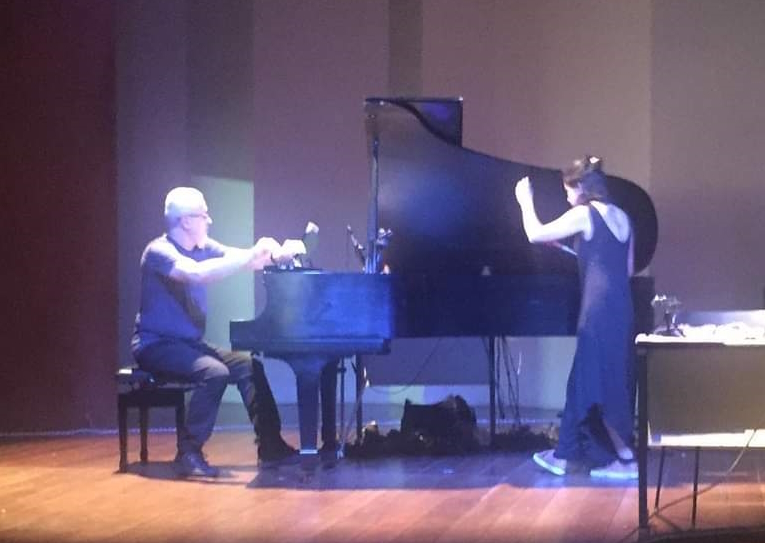
I launch the first post of this website to introduce PArtiMus. A group of artistic research in music guided by creation and experimentation. Our origin dates back to 2019 when the Jonas Reborn project, a joint creation of mine and Marina Spoladore, began to take shape. Marina, through her ongoing Ph.D. studies at the University of Aveiro at the time, brought us the first knowledge about the Artistic Research movement and one of its most important methodologies, Autoethnography. In this stage, the encouragement of Marina’s advisor, Prof. Helena Marinho, was fundamental in embarking on a journey of questioning our practices and concepts. It was Marina’s first experience as a composer and mine as a pianist at a more demanding level. The project developed from 2020 to 2022, during which we faced the pandemic and a difficult period in the country’s political life. All of this is reflected in the piece, which uses the parable of the prophet Jonah to explore the relationship between divinity or destiny and the unprotected population. It couldn’t be more timely.
The transition, however, from previous research to the formation of a new group occurred gradually, stemming from even earlier works that were developed in two other groups – the MusMat group, to which I belonged until 2020, and the Performance Today group, of which I am still a part. Pedro Bittencourt and I, from PT, offered the discipline of Advanced Seminars in Creative Processes II in the Ph.D. program at PPGM-UFRJ in the years 2019, 2020, and 2021, engaging in dialogue with dear colleagues from Brazil and abroad who were conducting artistic research. It was a decisive experience that allowed us to shift our perspective on art and music. Our work in the Abstrai Ensemble, of which Pedro is the leader, is already a recognized artistic research endeavor that has been developed in Brazil since 2011.

It was through my work with a mentee of mine, Bernardo Ramos, that concepts connecting the Musical Theory of Partitions with external elements – the body, and culture – were elaborated. These concepts stem from Partitional Analysis, a theory that deals with musical texture, which I have been grappling with for 20 years. In my thesis, published in 2009, there was already an intention to connect Partitional Analysis in a more tangible way to concrete elements. In fact, the philosophical foundation of Partitional Analysis itself is rooted in the linguistic-pragmatic turn of the Second Wittgenstein, which addresses life forms and games – that is, the practical actions involved in our daily lives.
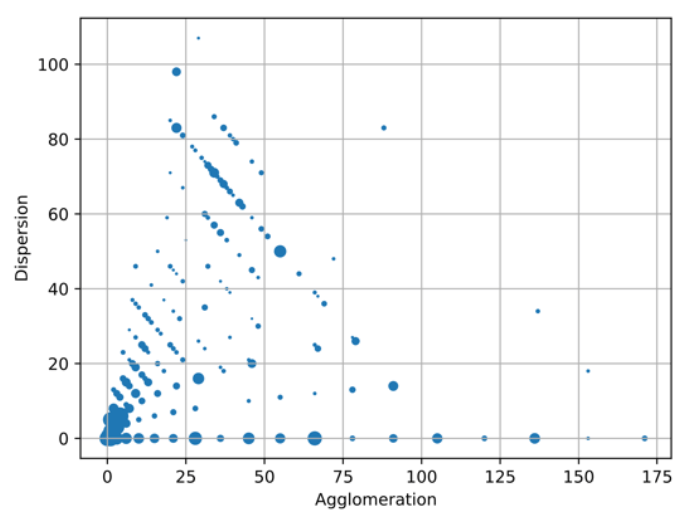
One of the studies developed with Bernardo is performative partitioning, which deals with recognizing the intimate relationship between, on one hand, the coupling modes of the musician’s body to their instrument, and on the other hand, the musical texture (particularly in terms of rhythmic partitioning) in its structural aspect. Fingers and hands produce lines and blocks that constitute the basic aspect of textural discourse. Momentary manual configurations organize themselves into larger structures, which are then referred to as partition complexes, consisting of very specific mathematical relationships. These complexes summarize modes of action that, at different hierarchical levels, reveal the structure of the instruments, the hand and fingers, and their relationship to the strings and frets (in the case of the guitar), for example. This path has been followed and developed by other authors, both within the group (such as Pedro Miguel de Moraes, who applies the same methodology to the piano) and within the MusMat group, such as Daniel Moreira, who has made important contributions to the expansion of the complexes and other parts of the theory (such as textural classes and thread-words, for example).

The partition complexes are also the subject of research by the Hermanos nucleus, a subgroup of the PArtiMus group consisting of myself, Luan Simões, and Professor Petrucio Viana from the Federal Fluminense University. This subgroup has been delving into various topics related to the group’s theme, such as microtonality (the subject of Luan’s undergraduate thesis), the compositional structures of Iannis Xenakis in the piece Herma (for which we published a paper in the proceedings of the Xenakis 22 Congress, held in Greece during the composer’s centennial celebrations), and the composition of computer-assisted works revolving around musical interpretations of aspects of Graph Theory. Luan’s programming skills and reflections have been essential in fueling the work and generating results. As for Petrucio, in addition to being a major reference in the field of Logic in the country, he is also an excellent poet; we are also working on his artistic works.

The most up-to-date topics in Partitional Analysis are also the subject of the work I am developing with Professor Marcos Sampaio from the Federal University of Bahia. Marcos, in addition to being an active professor of analysis and composer, is also a programmer. Marcos has developed extremely powerful tools for Partitional Analysis and Music Analysis in general. I am specifically referring to RP Scripts, which has revolutionized and expanded the existing tools of Partitional Analysis, bringing them into the Python environment and enabling a range of applications that are still being explored. Furthermore, Marcos has involved his talented composition students from UFBA in the research, with whom we have established fruitful exchanges. The work is generating compositions based on these theoretical frameworks, which will be discussed here soon.
The use of external structures in music is also the subject of research by Jonas Hocherman, who is pursuing a Master’s degree at PPGM-UFRJ. Since 2021, we have been collaborating with the SYKE – Finnish Environment Institute, aiming to sonify the seasonal movements of phytoplankton in the Baltic Sea. This initiative is part of our commitment to understanding the dynamics of global warming and its impact on oxygen production for the planet. Jonas is working on translating this data into musical structures that will be orchestrated for a Big Band or Symphonic Band at the end of his course. In this endeavor, we are receiving essential assistance from biologist and researcher Lumi Haraguchi.

The relationship between music and other arts is also explored by composer Angelica Faria, based in Florida, who focuses on music for audiovisual and dance, conducting research on semantic and poetic issues related to hybridity. Angelica has been a great companion, exchanging impressions with me regarding Partitional Analysis and also applying it in expanded contexts.

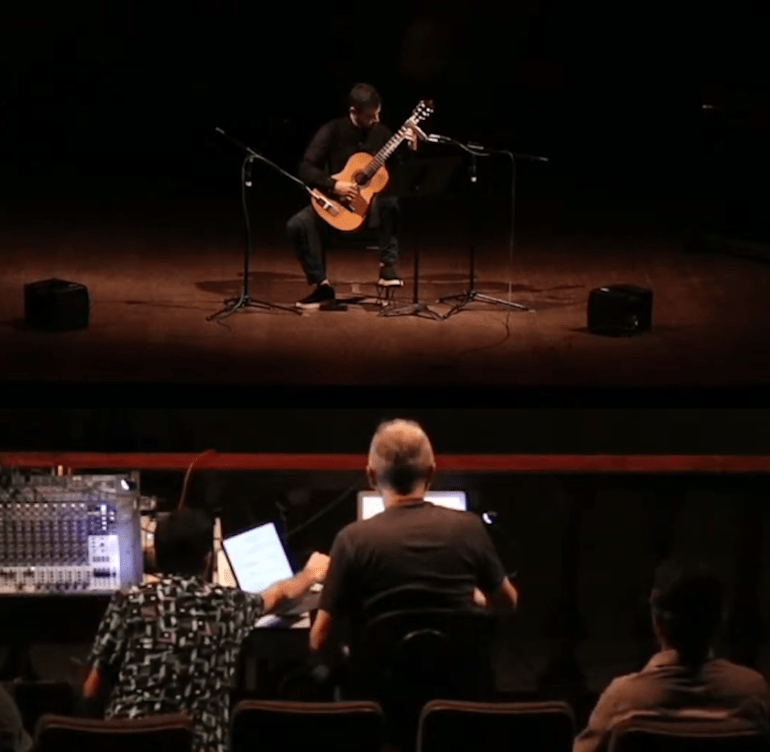
Artistic creation informed by research is therefore the main object of interest for the group, serving as a driving force for various productions. For example, performances that I have been doing with Sergio Ribeiro, who focuses on contemporary music, specifically for guitar and electronics. Sergio was my doctoral mentee, and we are developing several works and performances that will follow the spirit of the group.
 PArtiMus